 China:+86 13509643690



Evaluating the Cost-Effectiveness of UV Glue in Optical Assembly
2026-05-11


Evaluating the Cost-Effectiveness of UV Glue in Optical Assembly
Introduction to UV Glue in Optical Assembly
In the fast-evolving landscape of optical assembly, the choice of adhesive plays a crucial role in determining the efficiency, durability, and overall success of the final product. **Ultraviolet (UV) glue** has emerged as a leading adhesive solution for various optical applications. This article will explore the cost-effectiveness of UV glue, evaluating its advantages over traditional adhesives, applications in optical assembly, and long-term benefits that contribute to its growing popularity.
Understanding UV Glue: Composition and Mechanism
**UV glue** is a type of adhesive that cures upon exposure to ultraviolet light. Its unique properties stem from its chemical composition, primarily comprising oligomers, monomers, and photoinitiators. These components work together to create a strong bond, transforming from a liquid to a solid state within seconds to minutes upon UV exposure.
Key Components of UV Glue
- **Oligomers**: Offer flexibility and strength.
- **Monomers**: Help to adjust the viscosity and curing speed.
- **Photoinitiators**: Enable the curing process when exposed to UV light.
How UV Glue Works
When UV glue is applied to a surface, it remains in a liquid state until exposed to UV light. The photoinitiators absorb the UV radiation and begin a chemical reaction that polymerizes the resin, leading to a rapid curing process. This swift transformation minimizes assembly time, making it a preferred choice in high-volume production environments.
Benefits of Using UV Glue in Optical Assembly
The advantages of UV glue in optical assembly are numerous, driving its adoption across various industries. Here are the key benefits:
1. Fast Curing Time
One of the most significant advantages of UV glue is its **fast curing time**. Unlike traditional adhesives that require extended periods to set, UV glue can cure in mere seconds when exposed to UV light. This rapid process enhances production efficiency, allowing manufacturers to meet tight deadlines and increase output.
2. Strong Bonding Properties
UV glue forms a robust bond that is resistant to temperature fluctuations, moisture, and chemicals. This durability is particularly beneficial in optical applications where precision and reliability are paramount. The bond strength of UV glue often surpasses that of conventional adhesives, ensuring longevity in demanding environments.
3. Minimal Cleanup and Waste
The curing process of UV glue eliminates the need for excessive cleanup. Since it cures on demand, there's minimal waste compared to other adhesives that might require excess materials to ensure proper adhesion. This efficiency leads to cost savings and environmentally friendly practices in manufacturing.
4. Compatibility with Various Substrates
UV glue can bond a wide range of materials, including glass, plastics, and metals. This versatility makes it a suitable choice for diverse optical assembly components, including lenses, prisms, and mirrors. The ability to use a single adhesive for multiple applications reduces inventory costs and simplifies procurement processes.
5. Optical Clarity
In optical assemblies, maintaining clarity is essential. UV glue is often formulated to provide excellent optical clarity, ensuring that it does not impede light transmission. This characteristic is crucial for applications such as lenses and display assemblies, where clarity directly impacts performance.
Cost Considerations of UV Glue in Optical Assembly
While the benefits of UV glue are prominent, understanding its cost-effectiveness requires a deep dive into various financial aspects.
Initial Investment vs. Long-Term Savings
The initial cost of UV glue might be higher than traditional adhesives; however, the long-term savings often outweigh this expense. Fast curing times lead to decreased labor costs, as workers can focus on other tasks while the adhesive cures. Additionally, the reduced material waste and lower overall production time contribute to a more favorable cost-benefit ratio.
Maintenance and Downtime Costs
UV glue's rapid curing time minimizes maintenance and downtime in production processes. Traditional adhesives that require extended curing times can slow down production lines, leading to increased operational costs. By utilizing UV glue, manufacturers can enhance productivity and reduce expenses associated with prolonged assembly times.
Application Techniques for UV Glue in Optical Assembly
Applying UV glue correctly is vital for achieving the desired results. Here are some common techniques used in optical assembly.
1. Precise Dispensing
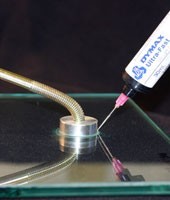
Utilizing automated dispensing systems can ensure that the UV glue is applied accurately to the components. This precision minimizes the risk of excess adhesive, which can lead to issues such as light scattering in optical applications.
2. Controlled Environment
Maintaining a controlled environment during application is essential for achieving optimal results. Factors such as temperature, humidity, and UV light intensity can affect the curing process. Ensuring that these parameters are stable will lead to consistent performance.
3. Post-Curing Treatment
In some instances, a secondary curing process may be beneficial. Post-curing under UV light can enhance the bond strength and durability of the adhesive, particularly for critical optical applications.
Challenges and Limitations of UV Glue
Despite its numerous benefits, UV glue does have some challenges and limitations that manufacturers should consider.
1. UV Light Penetration
For components with complex geometries or opaque materials, achieving uniform UV light penetration can be challenging. This limitation may result in incomplete curing, leading to weak bonds. Manufacturers must ensure that all surfaces are adequately exposed to UV light.
2. Shelf Life and Storage Conditions
UV glue has a limited shelf life and requires specific storage conditions to maintain its effectiveness. Exposure to light can cause premature curing, and manufacturers must adhere to recommended storage guidelines to prevent product degradation.
3. Surface Preparation Requirements
Proper surface preparation is crucial for achieving optimal adhesion with UV glue. Contaminants such as dust, oil, or moisture can hinder the bond's effectiveness. Implementing rigorous cleaning protocols is essential for ensuring successful applications.
Comparative Analysis: UV Glue vs. Traditional Adhesives
To better understand the cost-effectiveness of UV glue, it is helpful to compare it with traditional adhesive solutions.
1. Curing Time
Traditional adhesives often require extended curing periods, sometimes taking hours or even days to fully set. In contrast, UV glue cures in seconds, offering a significant advantage in fast-paced production environments.
2. Bond Strength
While some traditional adhesives perform adequately, UV glue typically provides superior bond strength, particularly in demanding applications. This reliability is essential for ensuring the performance and longevity of optical assemblies.
3. Versatility
Traditional adhesives may not bond effectively with all materials, whereas UV glue demonstrates a high degree of compatibility with various substrates. This versatility makes UV glue a more practical choice for manufacturers dealing with diverse materials.
Future Trends in UV Glue Technology
The adhesive industry continues to evolve, and UV glue technology is no exception. Emerging trends indicate that manufacturers will continue to refine formulations to enhance performance further.
1. Eco-Friendly Formulations
With increasing environmental concerns, the development of eco-friendly UV glue formulations is on the rise. Manufacturers are exploring bio-based raw materials and formulations with reduced VOC emissions, which can provide a sustainable solution without compromising performance.
2. Enhanced Curing Technologies
Advancements in UV curing technologies are expected to improve efficiency and consistency in the bonding process. Innovations such as LED curing systems offer energy-efficient options with reduced heat generation, which is beneficial for heat-sensitive materials.
3. Smart Adhesive Solutions
The integration of smart technology into adhesive solutions is gaining momentum. Sensors that monitor curing processes and provide real-time feedback may enhance control over applications, ensuring optimal results.
FAQs
1. What types of materials can UV glue bond?
UV glue can bond a variety of materials, including glass, plastics, metals, and ceramics, making it suitable for diverse optical assembly applications.
2. How does UV glue compare to epoxy adhesives?
UV glue has a faster curing time and typically provides better optical clarity, while epoxy adhesives may offer superior bond strength in some cases. The choice depends on the specific application requirements.
3. Can UV glue be used outdoors?
While UV glue is effective in many applications, prolonged exposure to UV light may degrade some formulations. Manufacturers should evaluate the specific UV glue used for outdoor suitability.
4. What is the shelf life of UV glue?
The shelf life of UV glue varies by formulation but generally ranges from 6 months to 2 years when stored in a cool, dark place.
5. Are there any health concerns when using UV glue?
Proper safety precautions should be taken when using UV glue, as exposure to uncured adhesive and UV light can pose health risks. Manufacturers should follow safety guidelines and use appropriate protective equipment.
Conclusion
Evaluating the cost-effectiveness of UV glue in optical assembly highlights its numerous advantages, including fast curing, strong bonding properties, and versatility across various materials. While UV glue presents some challenges, its benefits often outweigh these limitations. As manufacturers continue to recognize the long-term savings and efficiency gains associated with UV glue, its adoption in optical assembly will likely continue to grow. By staying informed about the latest advancements and best practices, companies can leverage UV glue's potential to enhance their production processes and achieve superior results in their optical assembly applications.
Related Information





Contact Information
Sanligao (Hong Kong) Co., Ltd.
Room A059, 15/F, Block A, Wah Sang Building, 14-18 Wong Chuk Yeung Street, ShaTin District, New Territories, Hong Kong
Tel:+852 94279660
Email:sales@sanligao.com
Sanligao (Vietnam) Co., Ltd.
Room 105, 1st Floor, Office Building, No. 22 Li Taizu Street, Dafu Fang, Beining City, Beining Province, Vietnam
TEL:+84-388882610
Email: sales@sanligao.com
Shenzhen Sanligao Technology Co., Ltd.
Room 506, Zhaoye Industrial Park, No. 172, Huanguan Middle Road, Songxuan Community, Guanhu Street, Longhua District, Shenzhen
Tel:0755-83155700
Email:sales@sanligao.com
Sanligao Technology (Dongguan) Co., Ltd.
Room 1306, Building 8, Jindi Zihui Port, No. 95, Jiaoping Avenue, Tangxia Town, Dongguan
Tel:0769-82960500
Email: sales@sanligao.com