 China:+86 13509643690


Understanding UV Adhesives for Effective Glass Bonding
2026-09-21


One of the key benefits of UV adhesives for glass bonding is their strong bond formation. When properly cured, these adhesives create a durable and transparent bond that is often as strong as, or stronger than, the glass itself. This is particularly important in applications where clarity and aesthetic appeal are paramount, such as in glass displays, windows, and decorative glass items.
Another advantage of UV adhesives is their versatility. They can bond various types of glass, including tempered, laminated, and even coated surfaces. This adaptability makes them suitable for a wide range of applications, from automotive glass to architectural elements. Additionally, UV adhesives are often formulated to resist yellowing over time, ensuring that the clarity of the bond remains intact regardless of environmental exposure.
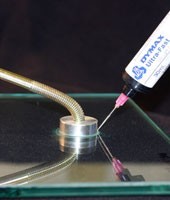
When selecting a UV adhesive for glass bonding, it’s essential to consider certain factors. The viscosity of the adhesive can affect its application method; for instance, lower viscosity products may be better suited for dispensing through fine tips, while higher viscosity adhesives may be more appropriate for thicker applications. Furthermore, the cure speed can vary, so it’s vital to choose an adhesive that aligns with your production timeline.
The surface preparation of the glass is another critical step in achieving optimal bonding strength. Glass surfaces should be clean, free of oils and contaminants, and ideally treated or roughened to enhance adhesion. In some cases, a primer may be recommended to improve the bond between the adhesive and the glass substrate.
It's worth noting that UV adhesives for glass bonding are not just limited to clear applications. Colored UV adhesives are available for specific design needs, allowing for creative applications where the adhesive itself can contribute to the overall aesthetic of the project.
In conclusion, UV adhesives offer a reliable and effective solution for glass bonding, providing strong, durable, and aesthetically pleasing results. Their fast curing times, versatility, and resistance to yellowing make them an ideal choice for a variety of glass applications. By understanding the unique properties and considerations of UV adhesives, you can ensure successful bonding in your projects.
Related Information





Contact Information
Sanligao (Hong Kong) Co., Ltd.
Room A059, 15/F, Block A, Wah Sang Building, 14-18 Wong Chuk Yeung Street, ShaTin District, New Territories, Hong Kong
Tel:+85 259633311
Email:sales@sanligao.com
Sanligao (Vietnam) Co., Ltd.
Room 105, 1st Floor, Office Building, No. 22 Li Taizu Street, Dafu Fang, Beining City, Beining Province, Vietnam
TEL:+84-388882610
Email: sales@sanligao.com
Shenzhen Sanligao Technology Co., Ltd.
Room 506, Zhaoye Industrial Park, No. 172, Huanguan Middle Road, Songxuan Community, Guanhu Street, Longhua District, Shenzhen
Tel:0755-83155700
Email:sales@sanligao.com
Sanligao Technology (Dongguan) Co., Ltd.
Room 1306, Building 8, Jindi Zihui Port, No. 95, Jiaoping Avenue, Tangxia Town, Dongguan
Tel:0769-82960500
Email: sales@sanligao.com